How Brain Games Help Kids Learn
Unlocking children’s potential through play: Explore the science and real-world benefits behind brain games, and how they foster critical thinking, memory, and creativity in elementary-aged kids.

Why Brain Games Matter for Children’s Learning
Brain games—such as logic puzzles, memory challenges, and interactive math activities—are far more than just entertainment for kids. These games are powerful educational tools that stimulate a child’s mind, promote cognitive growth, and build essential skills that extend far beyond the game board.
“Play is the highest form of research.”
The Science Behind Brain Games and Cognitive Development
Research in child psychology and neuroscience shows that engaging in problem-solving activities strengthens vital brain connections. Activities like puzzles, matching games, and visual challenges encourage kids to:
- Develop critical thinking and reasoning skills by analyzing patterns and finding solutions
- Boost working memory through repeat practice and recall tasks
- Enhance focus and attention span by concentrating on multi-step challenges
- Practice perseverance and flexible thinking when faced with difficult tasks
Real-World Benefits: From Classroom to Everyday Life
Regular participation in brain games has been linked to improved performance in math, reading, and even social skills. For example, logic puzzles support mathematical reasoning, while memory games help with reading comprehension and information retention. These skills are foundational for academic achievement and lifelong learning.
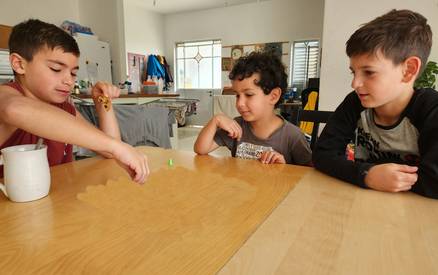
Types of Brain Games for Kids
- Logic Puzzles: Encourage deductive reasoning and pattern recognition. Try Logic Puzzles
- Brainteasers: Promote creative thinking and out-of-the-box problem solving. See Brainteasers
- Visual Challenges: Strengthen observation skills and visual memory. Try Visual Challenges
- Memory Games: Improve recall and cognitive flexibility. Play Memory Games
- Math Games: Make number sense and arithmetic fun and intuitive. Explore Math Games
How to Incorporate Brain Games Into Daily Learning
- Set aside a few minutes daily or weekly for play-based learning.
- Use printable or digital games that are age-appropriate and progressively challenging.
- Encourage group play for teamwork skills, or solo challenges for independent problem solving.
- Make it a family activity—parents and siblings can join to model persistence and positive attitudes.
Related Pages and Next Steps
Games & Learning
Explore our collection of logic puzzles, brainteasers, and interactive games designed to ignite curiosity and strengthen cognitive abilities.
See GamesUnderstanding IQ Scores
Learn how IQ tests work, what scores mean for children, and how cognitive games support both high and average learners.
Read MoreFrequently Asked Questions about Brain Games and Learning
- Logic Puzzles — Fun logic games to train young minds.
- Printable IQ Results for Kids — Get instant feedback after a test.
- Parental Guide — Tips for supporting your child’s learning journey.